Featured Stage
Road Rash
Road Rash Still Feels Mean in the Best Way
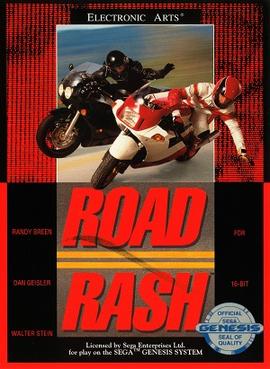
Road Rash is the 1991 motorcycle combat racer that turned a simple road race into something much rougher and more memorable. Electronic Arts built it around a clear loop: pick a race, survive traffic and rival bikers, finish high enough to qualify for the next event, and use your winnings to buy a faster machine. That structure sounds straightforward, but the personality comes from the violence layered into every stretch of road. Riders punch, kick, and swing weapons at each other while they fight for position, and the result feels less like a clean circuit racer and more like a barely controlled sprint through hostile California highways.
That tension is why the game still works so well in a browser session. Road Rash does not need a long warm-up period before it becomes exciting. You hit the accelerator, thread between cars, and instantly feel how narrow the margin is between a smooth run and a crash that sends both rider and bike skidding across the asphalt. Even a short play session gives you the full idea: speed matters, but judgment matters more.
How to Start Playing Road Rash on This Site
This page is set up for the same local EmulatorJS flow used across the site's retro library. Press Play, let the Sega Mega Drive session finish loading, and keep the page focused before you judge the controls. On localhost the project can load local files, while production pulls the game archive from the configured R2 URL. Either way, the practical routine is the same: wait for the boot sequence, confirm your movement is clean, and use fullscreen if you want more space to read traffic and rival positions.
The original control idea is easy to understand even if your exact keyboard or controller mapping depends on EmulatorJS. You need reliable steering, acceleration, braking, and a combat input for striking nearby riders. Before you try to win a race, test four basics: straight-line speed, lane changes without weaving, controlled braking before traffic, and one clean attack when you ride side by side with an opponent.
What the Core Loop Gets Right
Road Rash is not trying to simulate professional racing etiquette. It is trying to make every placement fight feel personal. The game asks you to finish near the front of the field, but it constantly tempts you to solve problems with aggression. A rider blocking your line can be passed cleanly, but knocking that rider off the bike is often faster and much more satisfying. At the same time, reckless fighting can cost you speed, ruin your angle into a bend, or dump you directly into traffic. The smartest runs balance cruelty with discipline.
The economy gives those choices extra weight. Prize money matters because better bikes make later events more manageable, so every finish feels tied to long-term progress instead of existing as an isolated race. You are not only chasing first place in the current event. You are trying to avoid expensive mistakes, preserve momentum, and build toward a machine that can survive faster fields.
The California road-trip framing also helps. Different courses have their own rhythm, with turns, hills, open stretches, and traffic patterns that reward observation. You learn where the road compresses, where an overtake becomes risky, and where a rival is likely to crowd you off the line.
Practical Tactics for Cleaner Finishes
The most common beginner mistake is treating Road Rash like a game that rewards constant maximum throttle. It does reward speed, but only when you can still read what is ahead. If you blast forward without leaving room to react, one car door, one badly timed rival hit, or one late correction can throw away the whole race. The safer pattern is to push hard on open road, then back off slightly when traffic thickens so you can choose a line instead of improvising one.
Combat should also be selective. Hitting every rider you meet feels natural at first, but many attacks cost more than they gain. If you swing while entering a turn, you can lose the exact stability you needed. If you start a fight in dense traffic, the camera and road hazards may punish you before the rival does. The better time to strike is when you are already alongside someone on a straighter section and know you can recover your balance immediately after contact.
Crashes are another place where patience beats panic. After a wipeout, many players mash inputs and try to recover instantly, which often leads to a second mistake. Instead, get your bearings, rebuild speed cleanly, and focus on returning to rhythm. Road Rash is harsh, but it is not always over after one fall. Plenty of races can still be salvaged if you stop chasing lost time in the worst possible way.
Why the Game Left a Mark
Road Rash came out in 1991 and quickly stood apart because it fused racing with direct rider-on-rider combat instead of treating collisions as accidents. The Sega Genesis version became the series reference point for many players, and later ports spread the formula to other systems. The concept was simple enough to grasp immediately, but unusual enough to feel fresh: a race game where winning sometimes meant surviving a fistfight at highway speed.
Its reputation also comes from tone. Many racing games of that era focused on clean time trials or formal competition. Road Rash felt nastier and more rebellious, and that edge is still obvious now. The game has a strong identity, and it communicates that identity in seconds.
It also remains readable in a modern browser context because the objectives are direct. Finish high, earn cash, improve your bike, and keep moving through the ladder. That immediacy is exactly what retro browser play needs.
Small Habits That Help a Lot
Use the first race as calibration, not proof of mastery. Learn how sensitive your steering feels in the browser, decide whether keyboard or controller gives you better lane control, and notice how much screen space you need to track traffic comfortably. Fullscreen is usually the easiest way to read danger early.
Try to pass with intent rather than emotion. Many strong runs come from ignoring a provocation, passing cleanly, and saving the hit for a safer section of road. You do not need to win every personal duel to win the race.
FAQ
Is Road Rash free to play on this site?
This page is prepared for the site's browser-based EmulatorJS setup, so the intended experience is quick local-style browser access without asking you to install a separate emulator first.
Which version of Road Rash does this page target?
This entry is built around the original 1991 Sega Genesis or Mega Drive release rather than the later 3DO or PlayStation-era Road Rash games.
What makes Road Rash different from a normal retro racing game?
Its defining hook is vehicular combat. You are not only managing speed and positioning, but also fighting rival riders with close-range attacks while avoiding traffic and crashes.
Can I use a controller instead of a keyboard?
Usually yes, as long as your browser and operating system recognize it properly. A controller is often the easiest way to keep steering smooth while handling acceleration, braking, and combat inputs.
What is the most common early mistake?
Riding too aggressively in traffic. New players often stay at maximum speed when the smarter move is to create a little space, read the lane, and then accelerate again.
Does Road Rash have progression beyond one race?
Yes. Finishing well earns money, and that money feeds the bike-upgrade loop that helps you handle faster events later in the career structure.
More Games
Comments
Loading comments…