Featured Stage
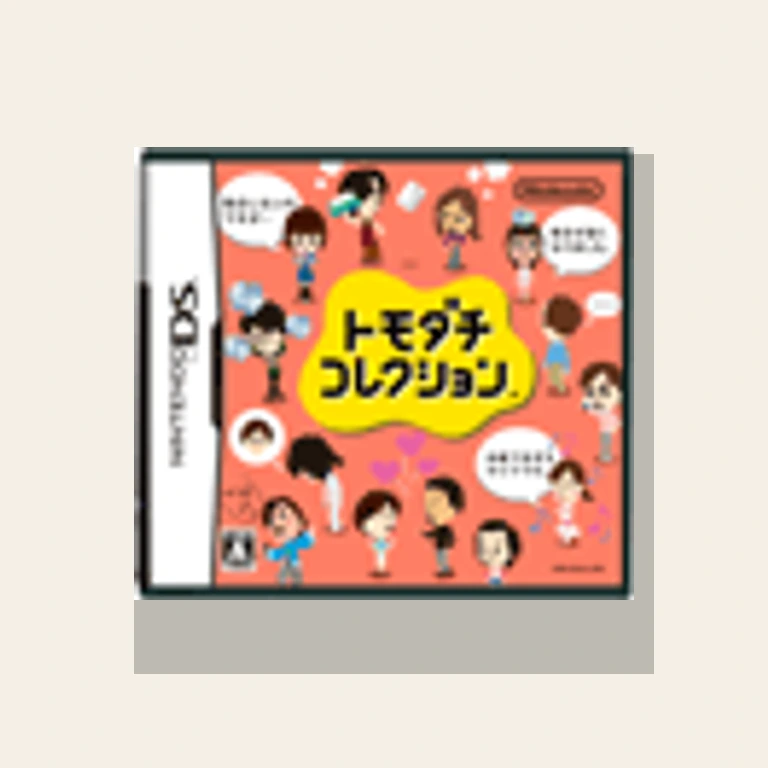
Tomodachi Collection


A Small Island Built From Familiar Faces
Tomodachi Collection is a Nintendo DS social life simulation that turns Mii characters into the residents of a tiny island and then asks you to live with the consequences of their personalities. Instead of chasing a score or clearing action stages, you make lookalike residents, move them into an apartment tower, check their worries, and watch the small dramas that come out of daily life. Nintendo's official site framed the game around creating Mii versions of yourself, family members, and friends, then letting them live together on an island where time passes in step with the real world.
That premise is what makes the game stick. These are meant to resemble people you know, down to personality settings and voice tone, so every argument, gift request, and romantic surprise feels more personal than it would with generic NPCs. The original Nintendo DS release launched in Japan on June 18, 2009, and Nintendo later highlighted Tomodachi Collection in an October 30, 2009 investor briefing as one of the titles helping keep DS momentum strong that season.
How This Browser Page Is Meant To Work
Think in Nintendo DS terms, not arcade terms
This entry is set up for the same local EmulatorJS workflow used for the site's emulator-driven games, but here the target platform is Nintendo DS rather than PlayStation. Tomodachi Collection is less about face buttons and more about tapping menus, visiting apartments, opening request bubbles, and choosing items. Once the game file is connected, the most practical browser setup will usually be desktop plus mouse, or a touch-capable device that can handle steady menu input. The first minute should be about checking focus, confirming that taps or clicks are being read correctly, and making sure text feels readable before you start building a larger island.
Start by learning the resident loop
Your early routine is simple. Open a resident's room, see whether they have a question or problem, decide whether to help, and then use the reward money or items to improve the island. This is not a game that rewards rushing through menus just to clear notifications. You get more out of it when you slow down enough to remember who likes what, which relationships look stable, and which Mii keeps creating chaos.
The Core Loop: Observe, Help, Repeat
Official Nintendo material repeatedly emphasizes that there is no fixed goal. You can chase higher resident satisfaction, collect treasure, build up wardrobes and interiors, or simply enjoy watching the island's routines. A Mii may ask you to solve a tiny problem, and another may arrive with a bigger issue tied to friendship or romance. When you solve those concerns well, satisfaction rises and you receive money or gifts that feed back into the simulation.
Food, clothing, interiors, catchphrases, songs, and presents all matter because they give each resident a slightly different identity. Nintendo's official pages describe feeding residents, gifting clothes and room decor, teaching songs, and unlocking more possibilities as satisfaction levels rise. Over time, the island becomes easier to read, and that accumulation of familiarity is more important than any single event.
Relationships Are The Real Spectacle
Tomodachi Collection works best when you treat it as a personality machine. Nintendo's official relationship pages describe Mii residents becoming friends, fighting, developing crushes, and even getting married. Because the people involved are your own Mii creations, those changes feel less like detached simulation outputs and more like a stream of tiny private jokes. A calm family member might become the center of romantic chaos, and two characters you expected to get along might suddenly clash.
The real-time structure strengthens that effect. The island is not frozen when you stop paying attention, and that creates the feeling that life continues between check-ins. For a browser player, that makes Tomodachi Collection a good fit for short revisit sessions: drop in, clear a few worries, see whether a relationship advanced or collapsed, and leave with a new story in mind.
Practical Advice For A Better First Session
The first good habit is to build a balanced island instead of flooding it with near-identical joke characters. The game is funnier when residents feel distinct, because you can read their preferences and relationship changes more clearly. Give them different looks, personalities, and voice settings so the simulation has room to create contrast. Another smart habit is to use your first rewards on broad utility rather than random novelty.
It also helps to stop looking for a perfect strategy. Tomodachi Collection is at its most interesting when you let the absurdity breathe a little. If a resident invites you into an odd song routine, or if a friendship turns into a silly argument, that is not wasted time. The better approach is to combine light management with curiosity and leave room for the weird outcomes that make the simulation worth revisiting.
Why The Game Stood Out On Nintendo DS
Tomodachi Collection did not need traditional action hooks to stand out. Nintendo positioned it around communication, recognizable faces, and player-authored humor, which made it unusual even in a strong DS library. The official site describes the genre in social terms rather than competitive ones, and the investor presentation from October 2009 shows that it landed with a broad enough audience to matter commercially. That is a useful reminder of why the game still translates well to a focused site like this one: it offers a retro session that is quieter, stranger, and more character-driven than a fighter, racer, or platformer.
A browser page for Tomodachi Collection does not need explosive spectacle to justify itself. It needs clean access, readable text, reliable touch or mouse input, and enough context for players to understand what makes the island funny once it begins to react to their choices. When the Nintendo DS game file is eventually connected, the value of the page will be simple: quick access to a simulation built around people you recognize, not just systems you master.
FAQ
Is Tomodachi Collection free to play on this site?
This page is prepared for the site's browser-based EmulatorJS flow, so once the Nintendo DS game file is connected you can launch it here without installing a separate emulator application.
What kind of game is Tomodachi Collection?
It is a social life simulation built around Mii residents. You create lookalike characters, place them on an island, respond to their worries, and watch friendships, arguments, romance, and daily routines unfold.
Do I need fast reflexes or advanced action-game skill?
No. Most of the play is menu-driven and observation-based. The key skills are patience, curiosity, and remembering which foods, clothes, or gifts suit each resident.
How are controls likely to work in a browser session?
Because the Nintendo DS original depends heavily on touch input, the practical expectation is mouse or touch interaction for menus, apartment visits, and item selection once the local emulator session is connected.
Does the game have a fixed ending or one correct goal?
Not really. Nintendo's own framing emphasized that there is no single required objective, so you can focus on resident satisfaction, treasure collecting, relationship drama, or simply watching the island develop over time.
Why is Tomodachi Collection still interesting now?
Its appeal comes from personality-driven surprises rather than twitch challenge. The fun is seeing familiar people turned into Mii residents and reacting to the odd songs, requests, and relationship turns the simulation creates.
More Games
Comments
Loading comments…